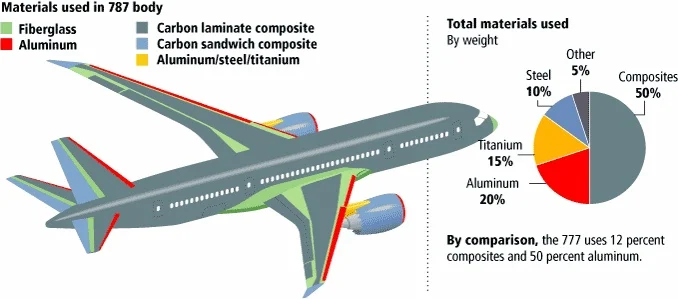
In the past week, I had an opportunity to take part in a hands-on training session at work where I learned about the manufacturing process of composite panels. Composite is a man-made material created by combining two or more different materials of different mechanical and chemical properties, typically reinforced carbon fiber combined with resin. Carbon fiber is a fabric like material with high-strength and high flexibility whereas resin is a liquid plastic that is cured to hold the fibers in place. Composites are widely used in aircraft bodies as well as wing structure due to its light-weight and durability.
Composite layup is a manufacturing process involves stacking up carbon fiber layers, typically in a mixed of different fiber orientations (0o, 45o, 90o, -45o), form into shape using mold and then seal in an air-tight vacuum-bag using atmospheric pressure to compress the layers together. The sealed bag is then cured in an oven with heat and pressure to transform it into high-performance engineered material. The layup process is done manually and is very time consuming and requires high level of skill and precision.
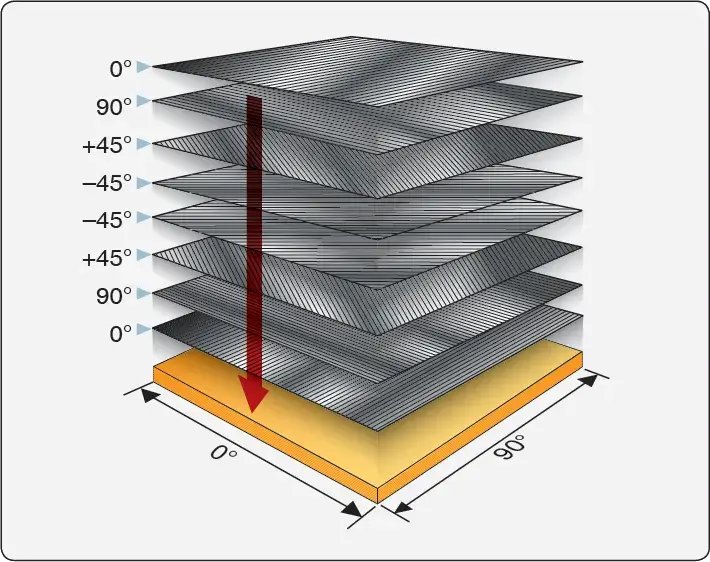
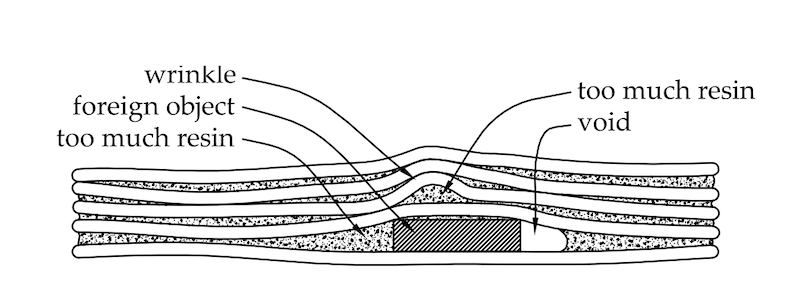
Because composite is a man-made material, the manufacturing process if not done in a controlled environment can produce many different defects. The orientation of the fiber is very important in determining the strength of the final part. Human errors such as placing a layer in the wrong orientation or simply leaving out a layer can reduce the strength of the material. Other types of defects such as having a bag leak can result in air gaps in between the layers leading to delamination. The forming process can also produce wrinkles in the panel. Foreign objects can get in between the layers, leading to having too much resin or too much void in some areas of the panel after the curing process. These types of defects produce inconsistent mechanical properties and reduce the fatigue strength of composites. Defects are accounted for in engineering analysis to ensure that the part can withstand its ultimate load case.
Composite manufacturing is a labor intensive manual process and can expose workers to toxic chemicals. Raw material typically costs over $36 per pound, adding to its high production cost. Large aerospace companies typically try to offset the cost by outsourcing the work to smaller and international suppliers for cheap labor.
Weight is a critical factor in determining the performance and operational cost of an aircraft. Therefore, composite materials, though expensive to manufacture, still has an advantage over steel or aluminum due to it being incredibly light weight in comparison.
Leave a Reply