Category: IS 5320 Assignment 8

  • Composite Layup Manufacturing

    In the past week, I had an opportunity to take part in a hands-on training session at work where I learned about the manufacturing process of composite panels. Composite is a man-made material created by combining two or more different materials of different mechanical and chemical properties, typically reinforced carbon fiber combined with resin. Carbon fiber is a fabric like material with high-strength and high flexibility whereas resin is a liquid plastic that is cured to hold the fibers in place. Composites are widely used in aircraft bodies as well as wing structure due to its light-weight and durability.
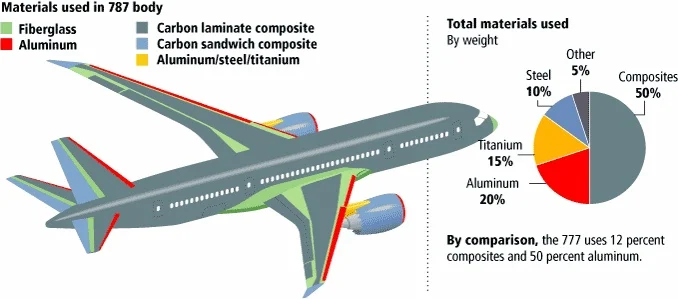
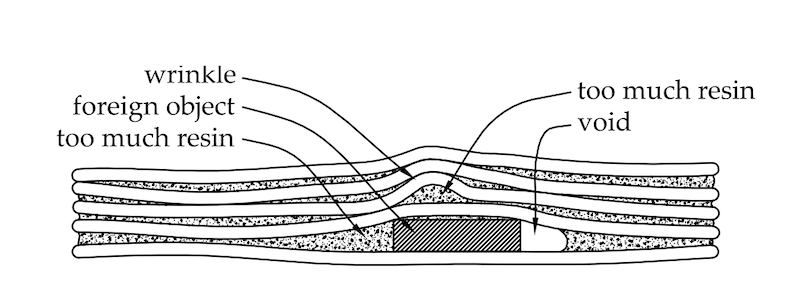
    Image from Appropedia, Composites in the Aircraft Industry

    Composite layup is a manufacturing process involves stacking up carbon fiber layers, typically in a mixed of different fiber orientations (0o, 45o, 90o, -45o), form into shape using mold and then seal in an air-tight vacuum-bag using atmospheric pressure to compress the layers together. The sealed bag is then cured in an oven with heat and pressure to transform it into high-performance engineered material. The layup process is done manually and is very time consuming and requires high level of skill and precision.
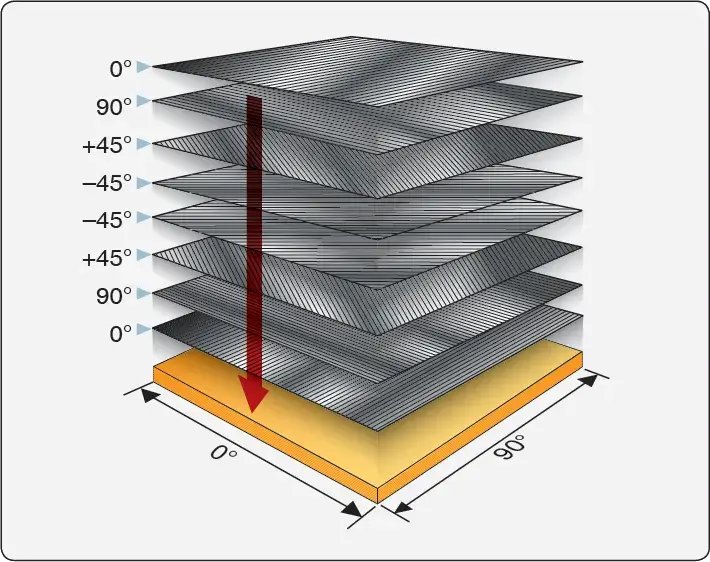
    Because composite is a man-made material, the manufacturing process if not done in a controlled environment can produce many different defects. The orientation of the fiber is very important in determining the strength of the final part. Human errors such as placing a layer in the wrong orientation or simply leaving out a layer can reduce the strength of the material. Other types of defects such as having a bag leak can result in air gaps in between the layers leading to delamination. The forming process can also produce wrinkles in the panel. Foreign objects can get in between the layers, leading to having too much resin or too much void in some areas of the panel after the curing process. These types of defects produce inconsistent mechanical properties and reduce the fatigue strength of composites. Defects are accounted for in engineering analysis to ensure that the part can withstand its ultimate load case.
    Composite manufacturing is a labor intensive manual process and can expose workers to toxic chemicals. Raw material typically costs over $36 per pound, adding to its high production cost. Large aerospace companies typically try to offset the cost by outsourcing the work to smaller and international suppliers for cheap labor.

    Weight is a critical factor in determining the performance and operational cost of an aircraft. Therefore, composite materials, though expensive to manufacture, still has an advantage over steel or aluminum due to it being incredibly light weight in comparison.
  • My Spring Break Plan

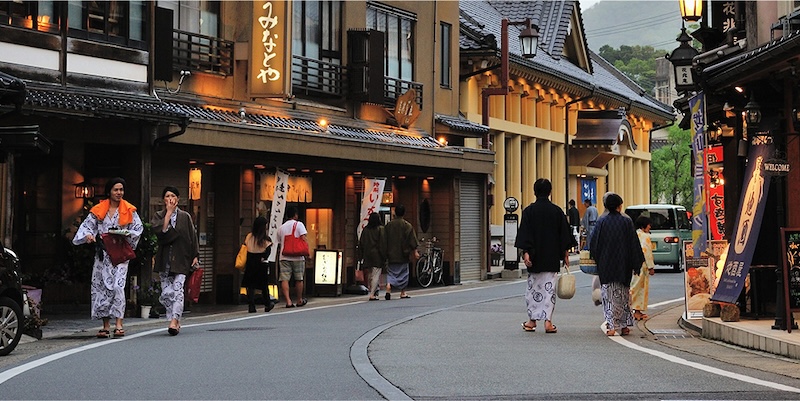
    I was planning for an upcoming spring break trip to Japan when I came across a video about staying in Kinosaki Onsen and decided to add it to my itinerary. Kinosaki Onsen is a 1300 year-old traditional hot-spring town in Toyooka, Hyōgo Prefecture, about 3 hours train ride from Osaka. The town is known for the seven public hot-springs, all tattoo-friendly, where visitors can enjoy bath-hopping and strolling through the town in yukata (traditional bathrobe) and geta (traditional wooden clogs).

    Image from Visit Kinosaki, “Strolling the Town in Yukata”

    Scenery

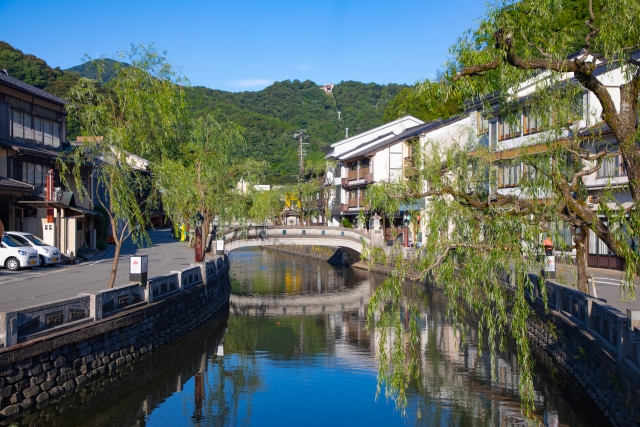
    The town offers a picturesque willow-lined canal with a tranquil, old-world feel, especially at night. In the spring, cherry blossoms can be found in the quiet path of Kiyamachi street along the Otani River, illuminated by pink lanterns in the evening offering a romantic and scenic stroll.

    Image from Japan Food Guide, “Cherry Blossoms in Kinosaki Onsen: Enjoying the Breathtaking Spring Scenery in the Onsen Town”
    Image from Visit Kinosaki, “Hot Springs and Cherry Blossoms”

    Ryokan Stay

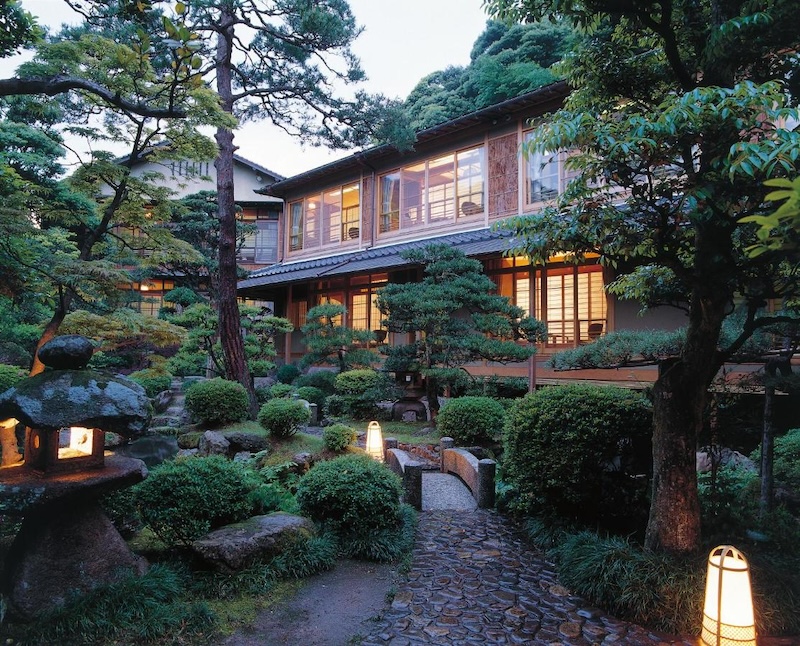
    The town operates with the concept of one big ryokan (traditional Japanese inn), an interconnected inn where streets act as hallways, hotels as guest rooms and the seven onsens as communal baths, creating a seamless immersive experience for visitors. All traditional inns in town offer free passes for hotel guests to visit the seven public onsens.

    Image from TripAdvisor, Kinosaki Onsen Nishimuraya Honkan

    Local Cuisine

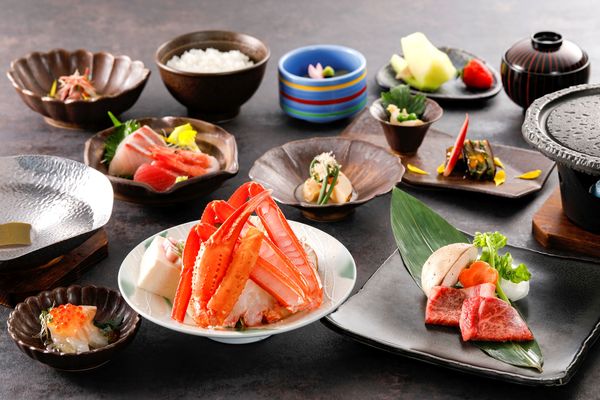
    Kinosaki Onsen is most famous for Matsuba crab (snow crab) and high quality Tajima beef (the precursor to Kobe beef). All ryokan (inn) in town offers kaiseki dinner, which is a traditional multi-course meal featuring the best seasonal local ingredients.

    Image from Visit Kinosaki

    Kinosaki Ropeway

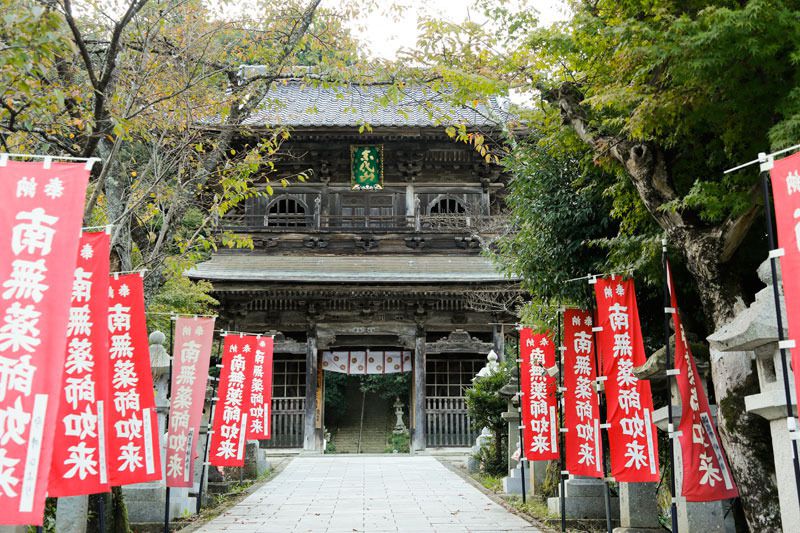
    Aside from soaking in the hot-spring water and enjoy local cuisine, visitors can hike or take the cable car to the summit of Mt. Daishi for panoramic views of the town and the Sea of Japan. The ropeway provides access to the historic Onsenji Temple. It was a well known rule (but no longer kept) that visitors to Kinosaki Onsen must travel up to the mountain to the Onsenji Temple, pray for permission and learn the proper way to enter the hot-spring.

    Image from Visit Kinosaki, Ropeway

    Kinosaki onsen is becoming increasingly popular to international tourists in recent years but still remains much less crowded compared to other hot-spring towns due to its distance from major cities. It is possible to do a day trip to Kinosaki Onsen from Osaka or Kyoto but it is best to stay at least a couple nights to relax and allow time to fully explore the town.

  • HW8 Summary

    Time Log Teams – time spent on other Teams’ sites (must have 3 entries or more):
    Date: Feb. 27, 2026 From: 08:45am To: 09:00am
    Date: Feb. 27, 2026 From: 11:30pm To 11:45pm
    Date: Feb. 29, 2026 From: 11:15pm – 12:00pm
    Date: Mar. 1, 2026 From: 02:00pm – 02:30pm

    Time Log Students
    – time spent on other students’ sites (must have 3 entries or more):
    Date: Feb 23, 2026 From: 08:00pm To: 09:30pm
    Date: Feb. 24, 2026 From: 10:00pm To: 10:30pm
    Date: Feb. 26, 2026 From: 09:30pm To: 10:00pm
    Date: Feb. 27-28, 2026 From: 11:45pm To: 12:15am

    Essay I. Summary of your activities in your contents including new contents created (one paragraph). Provide all the hyperlinks (clickable) of new contents you have created this week.

    I add two new posts this week. One post is titled My Spring Break Plan where I shared some information on a hot-spring town that I’m planning to visit during the upcoming spring break. This post is added to my homepage menu under My Life category. Another post that I added is titled Composite Layup Manufacturing. This post is an introduction to aircraft composite material where I shared what I learned during my training at work. This post is added under My Learning category. I kept my tag cloud updated by adding new relevant tags to each post. I also kept track to visitors’ comments and provide response whenever I can.

    My Spring Break Plan

    Composite Layup Manufacturing

    My Life

    My Learning

    Similar to other homework assignments, I updated my HWs menu to include HW8 with the summary post and the two new posts content.

    HW8

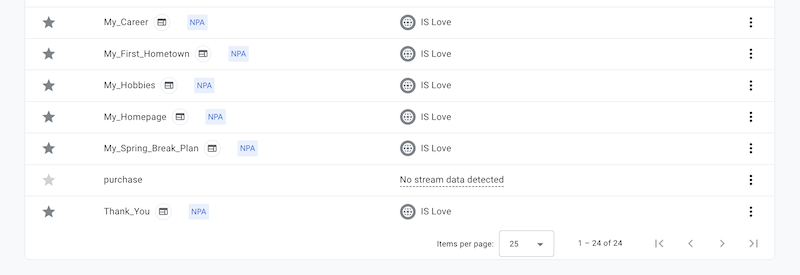
    I also added added a Thank You page to my menu as part of the assignment to implement conversion event.

    Thank you


    Essay II. Summary of your “Thank you” event conversion (add screenshots) (one paragraph)

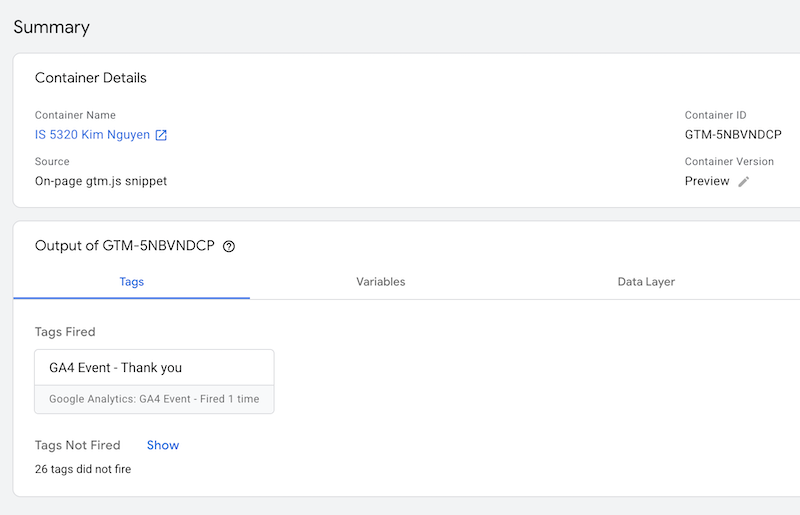
    I created a tag within Google Tag Manager with a trigger to fire the tag whenever someone view the Thank You page. This was done similar to how tags were created in the previous assignment 7. Initially, I tried to create this using a custom event from my GA4 Admin page under Data Display. However, this method seems to not be working correctly and it was not a recommended approach from the article. Below is an image showing the Thank You page tag fired successfully.

    In GA4 Admin page under Event, I marked the new Thank You event created in Google Tag Manager as a key event to be used for conversion. I also updated the counting method to once per session to avoid inflated data and I gave a default key event value of $1.

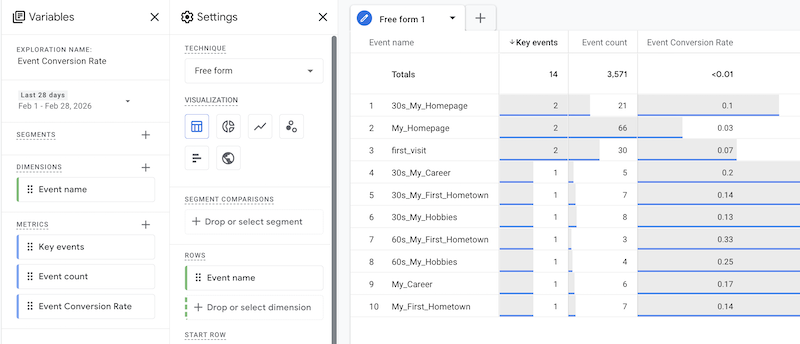
    In GA4 Exploration, I created an Event Conversion Rare report as seen in the image below. Currently, this report does not have data from my Thank You page key event because the event is newly created and marked as key, and it might take about 24-48 hours for data to be collected and reflected in the report. It does however show the conversion rates for some of the events that I created from last week. These events were marked as key a day before so I can see some data. The Event Conversion Rate is a custom metric calculated by taking the number of Key Event divided by Event Count. It can be seen that in the past day or two, I have two first_visit from classmates. The total of first_visit on my page is 30 and the Event Conversion Rate for this key event is 7%.


    Essay III. Summary of your “menu click” event conversion (add screenshots) (one paragraph)

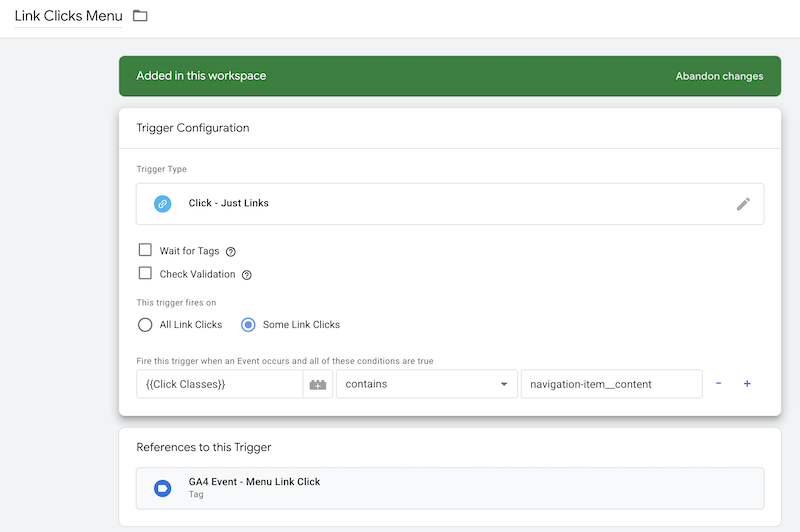
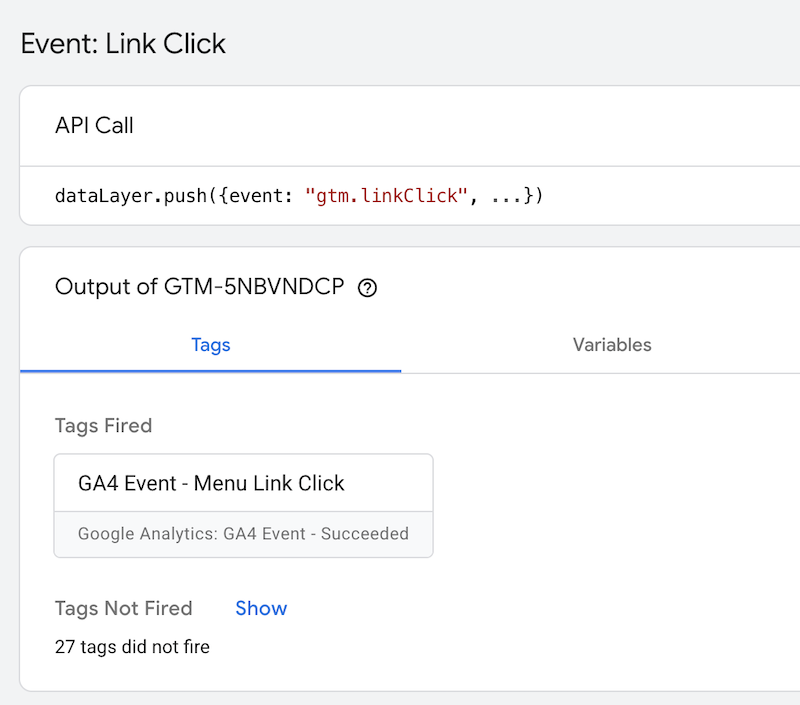
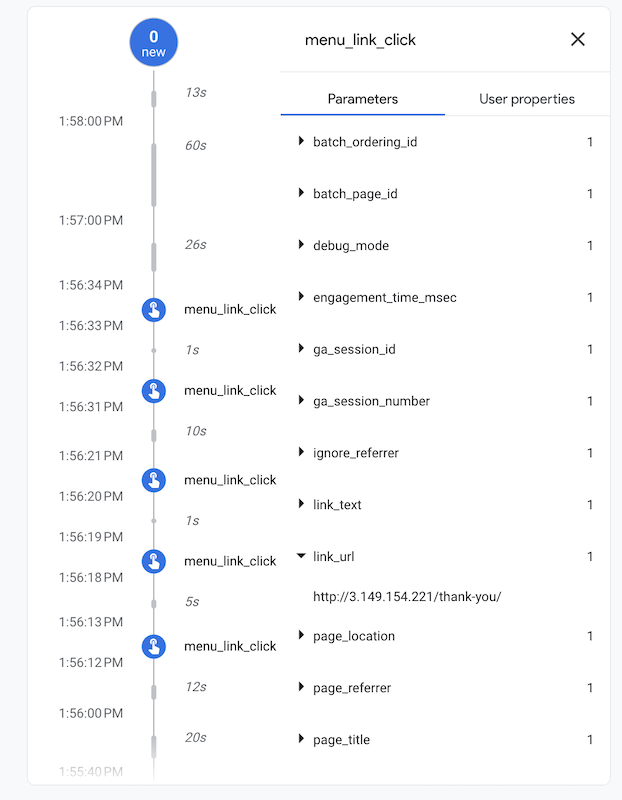
    I created a new tag in Google Tag Manager with a Menu Click Trigger when a user clicks on my navigation menu (click classes contain nativation-item_content). I also checked that this tag fired successfully. Link text and link url were added as event parameters and can be seen in debug view under data display. These activities are captured in the images below.

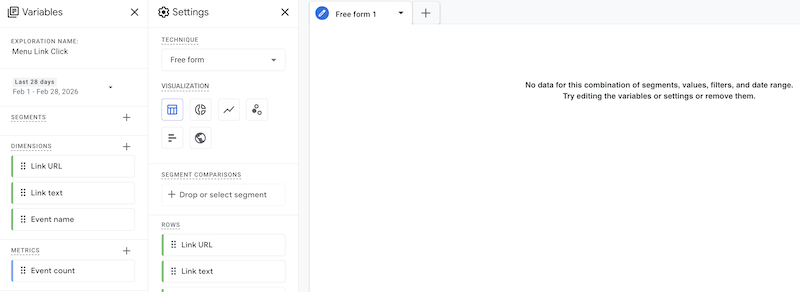
    I created a customer report called Menu Link Clicks under Explorations to see how many clicks each of my menu item gets. Currently, there’s no data to display yet because there is a bit of a delay between 24-48 hours after the event is marked as key for the data to be collected and imported. This report will provide powerful insight into what categories the users are most interested in to help me build future content and improve my menu navigation design.